Our Technology

Advanced Dental Technology in Houston, TX

Lava Dental is committed to providing exceptional dental care to patients in the community. We have invested in the latest dental technology and equipment to aid our skilled dental professionals in delivering high-quality services. They help our dentists to diagnose and provide customized treatment for different dental conditions accurately. We invite you to read and learn more about our advanced dental technology in Houston, TX.

Male dentist’s hand pointing at a computer screen displaying a 3D tooth model

Innovative Tools for Superior Dental Care

Cone Beam (CBCT)

A cone beam CT scan involves a special type of X-ray that allows us to see the details of your oral and facial health. This scan is more than just a typical X-ray; it will enable us to identify nerve pathways, soft tissue, and bone before treating you. The scan gives us a clear view of oral health, making treatment easier and more effective. The scan takes seconds in our office and gives us a highly detailed image.

Computer screen showing a cone beam CT scan

Most often, you’ll need a CT scan before oral surgery in our office. The reason is that the CT scan allows us to identify soft tissues, bone, and even nerves that could come into play during a surgical procedure. You might even need to have this scan done if you come to us with an emergency or when we are trying to find a problem you’re experiencing. The amount of radiation used to produce an image using the CT scan machine is minimal and considered safe and beneficial for most patients.

Because we use the latest technology available in X-rays and CT scanning machines, you can feel safe and confident having this type of scan done in our office. We will review your medical and health history to determine if a CT scan suits you. Most of our patients, regardless of age, can safely have the scan done. In fact, the scan is often easier and quicker than typical intraoral dental X-rays.

The process will begin by placing a lead apron over your body before the scan. We then have you stand straight in the middle of a larger machine. You will either rest your chin or bite down on a bite bar. The machine will then circle your head, taking images as it turns around. After just a few seconds, we will provide you with this image and review it to provide you with the treatment you need. You can expect to have a CT scan before undergoing oral surgery.

Dental X-Rays

A dental X-ray is an image that enables us to see underneath the surface of teeth and gums. These images can help us to see decay, infections, impacted teeth, bone loss, and many other oral-related problems. X-rays use a very minimal amount of radiation, so they are safe for patients of all ages. We aim to provide you with a comfortable and secure X-ray experience.

Dentist reviewing digital dental X-rays on a screen while a female patient wearing protective glasses listens

You would need dental X-rays because, in many cases, an examination isn’t enough. There may be a lot going on below the surface of your gums, and we won’t be able to see anything without the help of an X-ray. Some of the different things we can see on an X-ray include underlying tooth decay, root infections, bone loss, and impacted wisdom teeth. For children, X-rays allow us to monitor the development and growth of permanent teeth.

Most of our patients are candidates for dental X-rays. Because we use such a small amount of radiation, the process is deemed safe and necessary for those coming into our office. However, we will always review your medical history before recommending any X-ray procedure to ensure you are healthy enough to undergo radiation in the office.

Our friendly team member will drape a lead apron over your midsection. We then place a tiny, comfortable device inside the mouth and behind several of your teeth. Our X-ray machine is then aimed at this device, and the image is taken. We repeat this exact process for all other necessary X-rays. Our team of experts will then review your X-rays to help create a unique treatment plan. We often recommend getting X-rays regularly and at most appointments.

Digital Scanning

Digital scanning, also known as 3D intraoral scanning, uses the latest technology to take pictures and make impressions of the mouth. It uses computer-aided software and a tool in the shape of a wand to create a virtual image of the mouth. The digital software is highly accurate and can display tissue and teeth.

Digital scanning helps our doctors create immediate digital impressions and images so technicians can quickly make items such as crowns, retainers, dentures, or bridges. Intraoral scanning can help identify teeth alignment issues and assist in correcting orthodontic problems with your teeth.
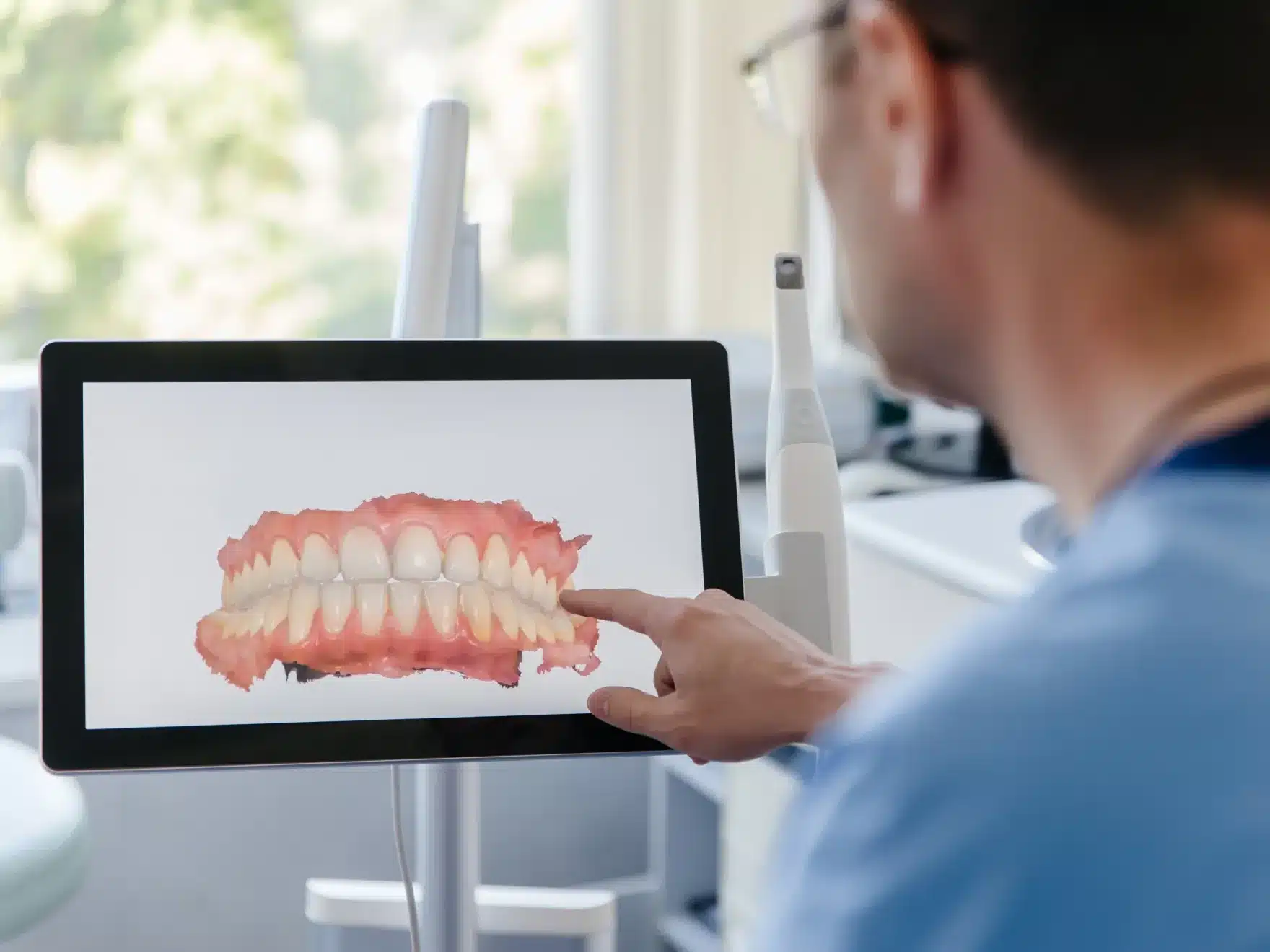
Male dentist’s hand pointing at a computer screen displaying a 3D intraoral scan

Digital scanning uses a wand and a computer to take impressions of teeth and mouths. The wand is inserted into the patient’s mouth and gently moved around to capture the top and bottom teeth. While the wand moves, the computer captures digital images instantly and displays them on a screen. The process is painless and quick, and patients can sit comfortably while their impressions are taken.

Digital scanning provides many benefits to the patient and our doctors, and the process runs quickly and in one appointment. Impressions are quick, and do not use goopy materials. The process is easy and comfortable. Digital scanning is highly accurate. Computer-aided technology immediately provides an image of your teeth and gums to help guide the process. Items such as crowns, bridges, retainers, or dentures can be made accurately and quickly for patients. New digital scanning technology reduces materials and labor, reducing costs for both the patient and doctor.

If you are due for your dental exam or would like to schedule an appointment, contact Lava Dental, and our team will be happy to assist you. We deliver the highest level of service and always provide our patients with the latest dental tools and technology.

Digital X-Rays

Digital X-rays are the latest technology and are much safer than traditional X-rays. There is no concern with radiation exposure, and the new technology has very low radiation levels. Digital X-rays reduce a patient’s radiation exposure by 90 percent. Safety is our top priority, and we always ensure our equipment is safe for our patients.

Digital X-rays use a sensor or scanner inserted into your mouth to take images of your teeth and jaw. Our sensors are used in conjunction with computer technology to provide images instantly. You can conveniently view these images in our exam rooms during your appointment.
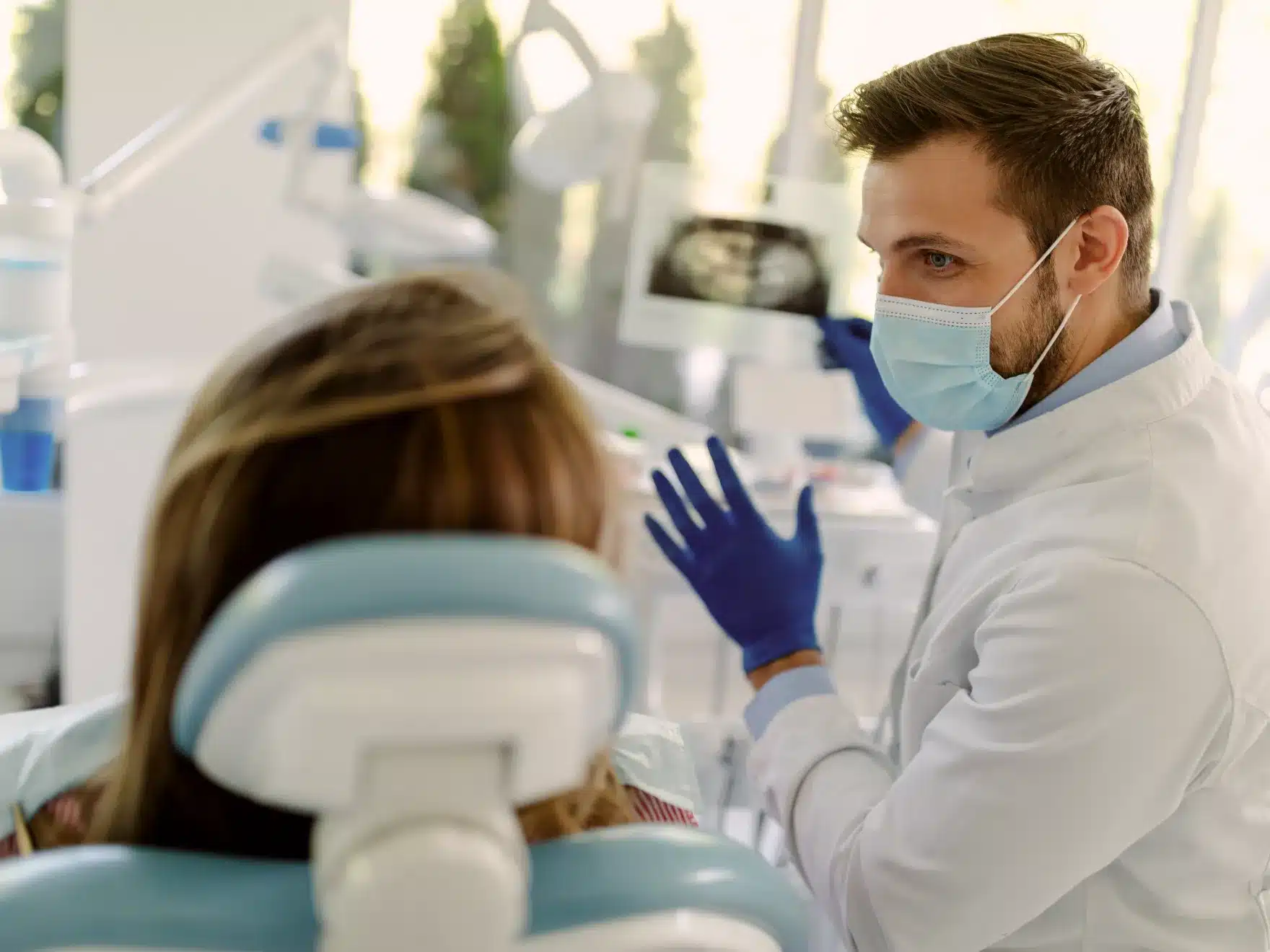
Male dentist reviewing digital X-rays with a female patient in the dental chair

During our dental exams, we can only see the surface of your teeth and gums. Digital X-rays allow our doctor to view the roots and hidden areas of your teeth and gums. They help us to ensure your teeth are healthy and free from infection or decay. Digital X-rays can quickly identify issues inside your teeth and alert us to any signs of disease. This capability allows our team to treat you promptly and avoid complications. In addition to decay, digital X-rays help us watch teeth that have not yet erupted or monitor growth in the jaw.

When you visit our office for your dental exam, our staff will insert a sensor or digital scanner into your mouth. This process will take images of your teeth and mouth, and will send the pictures instantly to our computer software. You can view digital images immediately in the exam room. The type of X-ray required will determine whether we use a scanner or a sensor to take the picture. Patients can review the images alongside our doctor, and if treatment is needed, we will create a customized treatment plan that works for you.

Digital X-rays take images of the inside and outside of your mouth. The type of image needed will depend on the location of the X-ray.

  • Bite Wing X-Rays: Bite-wing X-rays require you to bite down on a sensor. This type of X-ray is common and can detect decay between your teeth. Bite wing x-rays are also used to evaluate the jawbone’s condition and to check existing restorations.
  • Periapical X-rays: Periapical X-rays take an image of the entire tooth from top to bottom, including the root structure. This type of X-ray can help detect an infection or abscess in or around a tooth and bone loss in the jaw.
  • Panoramic X-Rays: Panoramic X-rays are taken using a machine that rotates around your head. This technology provides an image of your entire mouth. We use this type of X-ray to monitor wisdom teeth or to plan for procedures such as implants.

Each patient’s dental needs determine the frequency of digital X-rays. Our team will only take a digital image if absolutely necessary and with patient consent. During your visit, we review your medical history, dental history, and any symptoms or signs that indicate an X-ray is required. Our team uses X-rays to monitor growth, detect new areas of decay, or evaluate gum disease.

Intraoral Cameras

Intra-oral cameras help us see everything going on inside your mouth. Rather than a typical examination, this camera magnifies everything it looks at concerning your smile. This allows us to see areas of decay, cracks, breaks, and fractures, as well as other intra-oral problems. The camera is safe, effective, and can be used on patients of all ages.
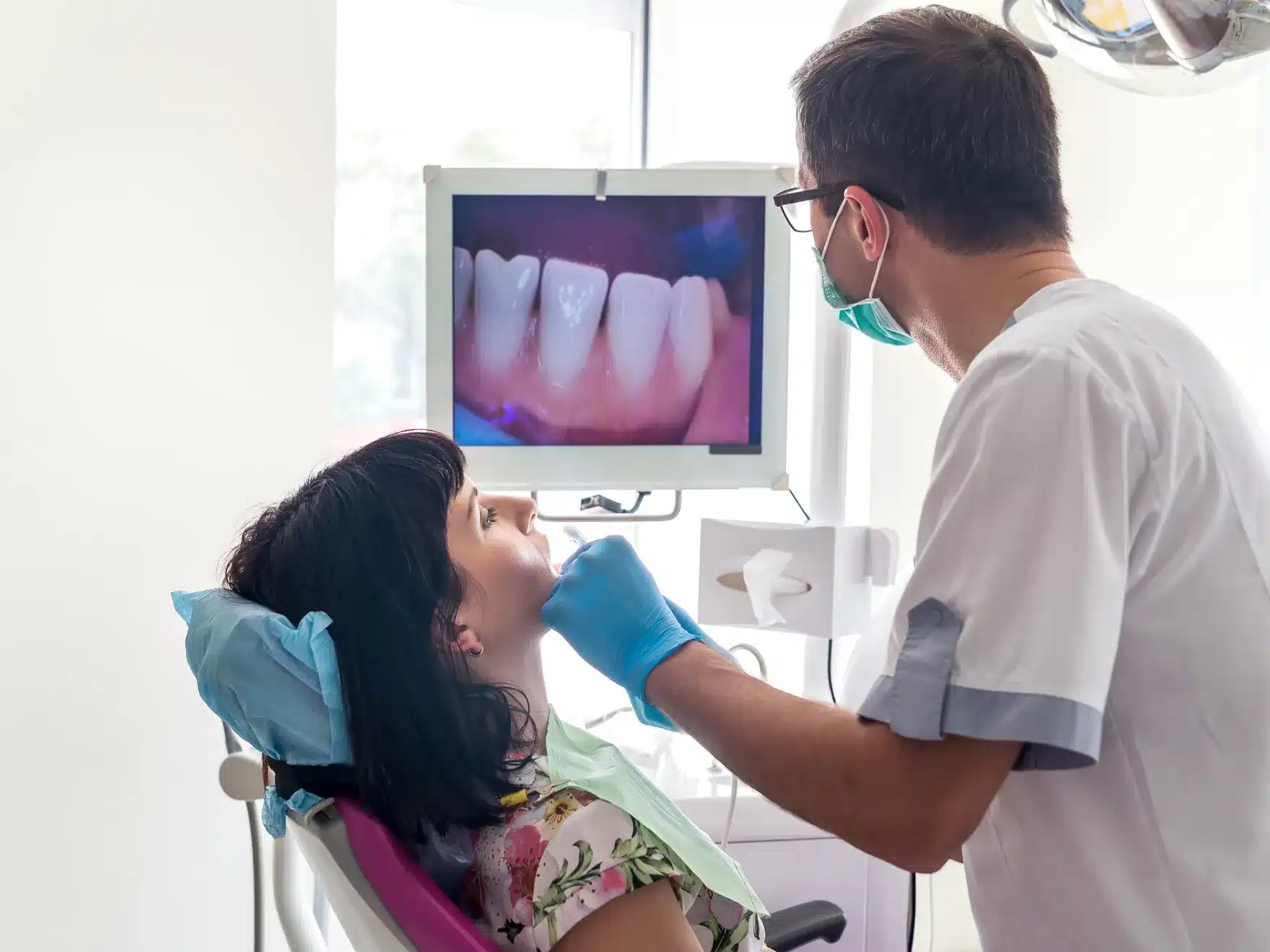
Male dentist examining a female patient with an intraoral camera

Our dentists may need an intra-oral camera to get a better view inside the mouth. Because the camera magnifies what it’s coming into contact with, we are able to spot problems more easily and conveniently. Likewise, we can show you the findings on the camera so that you know more about the treatment that is needed. The camera is an effective tool that we use every day in our practice.

Most patients in our office can and will benefit from this intra-oral camera. The camera gives us a clear view of everything and anything happening within the mouth. This helps us to find problems more quickly and create treatment plans according to what it is that you need. The intra-oral camera can be used before, during, or even after certain procedures.

The appointment will begin by sitting comfortably in one of our examination rooms. We then use a handheld device and place it inside the mouth. The image will show on our computer screen in the room, which allows you to see the process and what we’re looking at. We then scan your mouth with the camera, looking for other problems. We then discuss treatment options according to what we find and what works best for you. The camera is easy to use and takes just minutes in our office.

Ready to Schedule an Appointment?

Ready to experience the Lava Dental difference? We invite you to call 281-741-7400 or book an appointment to experience exceptional dental care in Houston, TX. We are eager to help you achieve the smile of your dreams!

Our Patients Say it Best.